
If you are noticing stubborn dark spots, acne marks, or uneven skin tone that will not fade on their own, you are not alone. At our skincare studio, we see hyperpigmentation concerns every day, and there are effective, professional facial treatments available through Renew Skin Services that can help you get clearer, brighter, more even-looking skin.
What Are Dark Spots and Hyperpigmentation?
Dark spots and hyperpigmentation are areas of skin that appear darker than your natural skin tone. They happen when your skin produces extra melanin, the pigment that gives your skin, hair, and eyes their color.
Hyperpigmentation can show up as:
- Flat, brown or black spots (often called sun spots, age spots, or liver spots)
- Post-inflammatory marks left behind after acne or skin injuries
- Patches of darker skin, such as melasma on the cheeks, forehead, or upper lip
These spots are usually harmless, but they can be frustrating and affect how you feel about your skin. Professional facial treatments and a consistent skincare routine can significantly reduce their appearance over time.
Common Causes of Dark Spots
Understanding what is triggering your pigmentation helps us choose the safest, most effective facial treatment plan for you. Some of the most common causes include:
- Sun exposure – UV rays stimulate melanin production, leading to sun spots and uneven tone.
- Acne and inflammation – Breakouts, picking at blemishes, eczema, or irritation can leave dark marks once they heal.
- Hormonal changes – Pregnancy, birth control, or hormonal shifts can trigger melasma.
- Skin injuries – Cuts, burns, insect bites, or aggressive treatments may heal with leftover pigmentation.
- Genetics and skin type – Some people naturally produce more melanin and are more prone to hyperpigmentation.
- Medications – Certain drugs can make skin more sensitive to the sun or trigger pigment changes.
Who Is Most Affected by Hyperpigmentation?
Hyperpigmentation can affect anyone, but it is especially common in:
- People with medium to deeper skin tones (Fitzpatrick skin types III–VI), who naturally have more melanin
- Those who spend a lot of time in the sun without consistent sunscreen
- Clients with a history of acne, especially deeper or inflamed breakouts
- Individuals who are pregnant, postpartum, or on hormonal medications
- Anyone who has had recent skin injuries, cuts, burns, or aggressive DIY treatments
During your consultation, we assess your skin type, lifestyle, and medical history so we can recommend the safest facial treatments for your specific pigmentation concerns.
Professional Facial Treatments for Dark Spots & Hyperpigmentation
There is no single “best” treatment for every person. The most effective plan usually combines several gentle treatments over time, plus a strong at-home routine and daily sun protection. Below are the professional facial options we commonly use to help fade dark spots and even out skin tone.
Chemical Peels
Chemical peels use carefully chosen exfoliating acids (such as glycolic, lactic, mandelic, or salicylic acid) to dissolve the dull, discolored surface layers of skin and stimulate fresh, evenly pigmented skin to come to the surface.
How they help dark spots:
- Speed up cell turnover so old, pigmented cells shed more quickly
- Target post-acne marks, sun damage, and uneven tone
- Can be customized for different skin types, including sensitive or deeper skin tones with appropriate formulations
What to expect during treatment: After cleansing, your skincare professional applies the peel solution for a set amount of time, then neutralizes or removes it. You may feel warmth, tingling, or mild stinging that settles quickly. The entire appointment usually takes 30–60 minutes.
How many sessions are needed: Many clients see a brighter, smoother look after one peel, but dark spots and hyperpigmentation typically require a series of 3–6 treatments spaced about 3–4 weeks apart.
Results and downtime: Mild peels may cause light flaking or dryness for a few days. Stronger peels can lead to more noticeable peeling for 5–7 days. With proper aftercare and sun protection, dark spots gradually soften over several weeks as new skin appears.
Possible side effects: Temporary redness, sensitivity, and dryness are common. When performed and aftercare is followed correctly, more serious side effects are rare. We always patch test and choose peels appropriate for your skin tone and history.
Enzyme Facials
Enzyme facials use fruit enzymes (such as papaya, pineapple, or pumpkin) to gently dissolve dead skin cells without the stronger acids used in chemical peels. They are ideal for sensitive skin or as a maintenance treatment between more intensive sessions.
How they help dark spots:
- Provide mild exfoliation to brighten dull, uneven skin
- Help active brightening ingredients penetrate more effectively
- Support healthy cell turnover with minimal irritation
What to expect: After a gentle cleanse, the enzyme mask is applied and left on for 5–15 minutes. You may feel mild warmth or tingling. The treatment is usually very comfortable, followed by soothing products and sunscreen.
How many sessions are needed: Enzyme facials can be done every 2–4 weeks and are often combined with other treatments in a series. You will notice an instant glow, and with regular visits, pigmentation can look softer and less noticeable.
Results and downtime: There is typically no downtime. Skin may look slightly pink right after but quickly returns to normal, with a fresher, brighter appearance.
Microdermabrasion
Microdermabrasion is a mechanical exfoliation treatment that uses a diamond-tipped wand or fine crystals to gently polish the surface of your skin and vacuum away dead cells.
How it helps dark spots:
- Smooths rough texture and removes surface-level discoloration
- Enhances penetration of brightening serums applied afterward
- Improves overall tone and radiance over a series of treatments
What to expect: After cleansing, your provider glides the microdermabrasion device over your skin. Many people describe the feeling as a gentle scratching or sanding with suction. The treatment usually takes 30–45 minutes.
How many sessions are needed: For most clients, a series of 4–8 sessions spaced 2–4 weeks apart provides the best results for mild to moderate pigmentation and uneven texture.
Results and downtime: Skin may look slightly pink and feel tight for a few hours. Most people return to normal activities immediately. With each session, dark spots can appear softer and your complexion more even.
Possible side effects: Temporary redness, mild sensitivity, or slight flaking are possible. We avoid this treatment on very inflamed or reactive skin and always adjust the intensity to your comfort level.
Microneedling
Microneedling uses fine, sterile needles to create controlled micro-channels in the skin. This triggers your natural healing response, stimulates collagen, and can help break up excess pigment.
How it helps dark spots:
- Improves the appearance of post-acne marks and uneven tone
- Helps remodel scar tissue and smooth texture
- Allows brightening serums to penetrate deeper for enhanced results
What to expect: A numbing cream is usually applied for comfort. Your skincare professional then glides the microneedling device across your skin. You may feel a prickling sensation. Skin often appears red or slightly swollen immediately afterward, similar to a mild sunburn.
How many sessions are needed: Most clients benefit from 3–6 sessions spaced 4–6 weeks apart, depending on the type and depth of pigmentation and any scarring.
Results and downtime: Redness usually subsides within 24–72 hours. As your skin heals and produces new collagen, dark marks and uneven tone gradually soften over several weeks to months.
Possible side effects: Temporary redness, swelling, and a tight or dry feeling are normal. When performed by a trained professional with proper aftercare, the risk of infection or scarring is very low. We are extra cautious with deeper skin tones and active breakouts.
Laser Facials and Light-Based Treatments
Laser facials and other light-based treatments use specific wavelengths of light to target and break up excess pigment in the skin. Different technologies are suitable for different skin tones and types of pigmentation.
How they help dark spots:
- Target melanin in dark spots and sun damage with precision
- Can provide faster fading of certain types of pigmentation compared to surface exfoliation alone
- Some systems also stimulate collagen for smoother, firmer skin
What to expect: After eye protection is applied, quick pulses of light treat the skin. You may feel brief snaps or warmth. Treatment time varies from 15–45 minutes depending on the area.
How many sessions are needed: Many clients need 2–5 sessions spaced 4–6 weeks apart for best results. Some dark spots may darken temporarily before they lighten and flake off.
Results and downtime: Mild redness and warmth are common right after treatment. Depending on the device and your skin, there may be a few days of darkening or very light flaking as pigment comes to the surface.
Possible side effects: When not properly matched to skin type, lasers can cause burns or worsening pigmentation, especially in deeper skin tones. This is why a thorough consultation and experienced provider are essential. We will always guide you toward the safest options for your complexion.
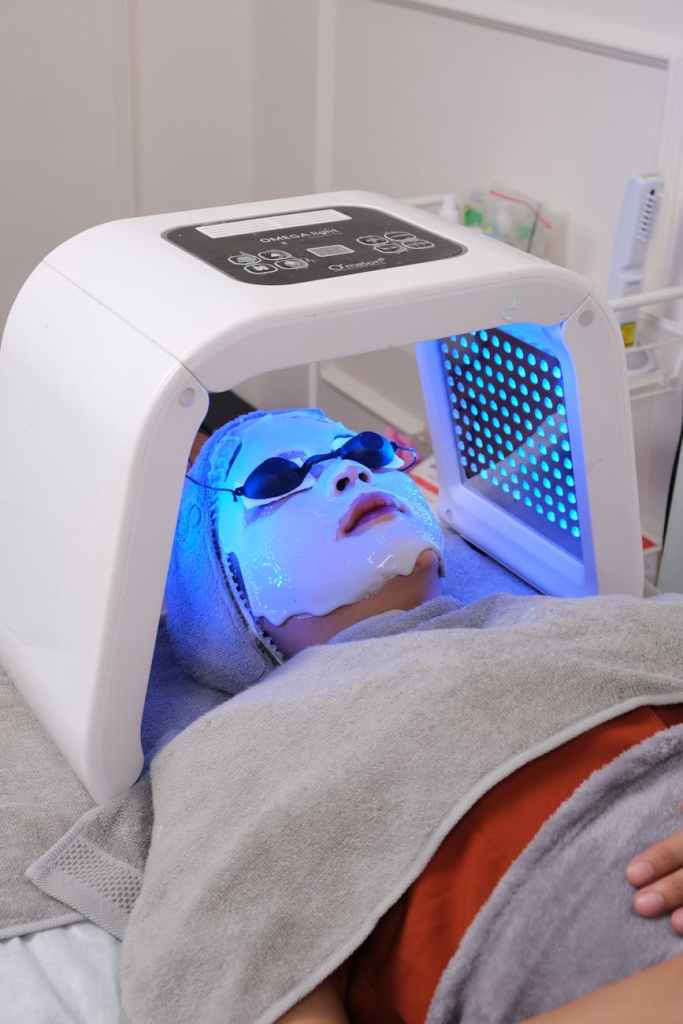
LED Light Therapy
LED (light-emitting diode) therapy uses low-level, non-thermal light to support skin healing and reduce inflammation. It is gentle, relaxing, and often added on to other facials.
How it helps dark spots:
- Red and near-infrared light support healthy cell function and repair
- Blue light helps reduce acne-causing bacteria, minimizing future post-acne marks
- Helps calm inflammation, a key trigger for hyperpigmentation
What to expect: You simply relax under the LED panel for 10–20 minutes after your facial. There is no pain, no heat, and no downtime.
How many sessions are needed: LED therapy works best as a series and as a support treatment. Weekly or bi-weekly sessions for 4–8 weeks can visibly improve clarity and radiance, especially when combined with other pigmentation treatments.
Results and downtime: There is no downtime. Many people notice a healthier glow right away, with more even tone and calmer skin over time.
Brightening Facials
Brightening facials are customized treatments that combine deep cleansing, gentle exfoliation, targeted serums, massage, and masks formulated to reduce dullness and support a more even skin tone.
Spotlight: Luxury Anti-Aging Facial for Hyperpigmentation
Our Luxury Anti-Aging Facial is an excellent choice if you are targeting dark spots and hyperpigmentation. This treatment layers brightening ingredients with gentle exfoliation to encourage healthy cell turnover, helping discoloration lift more quickly while keeping your skin calm, hydrated, and glowing.
Ready for a more even, radiant complexion? Book the Luxury Anti-Aging Facial through Renew Skin Services to start fading dark spots in a relaxing, results-focused treatment.
How they help dark spots:
- Use ingredients like vitamin C, niacinamide, kojic acid, arbutin, and licorice root to interfere with excess melanin production
- Enhance radiance and help fade mild discoloration over time
- Support skin barrier health, which is essential for safely treating pigmentation
What to expect: After discussing your concerns, your esthetician designs a facial around your skin’s needs. You can expect cleansing, exfoliation, extractions if appropriate, a brightening mask and serums, massage, and SPF to finish.
How many sessions are needed: Brightening facials can be done every 4–6 weeks as part of a long-term plan for hyperpigmentation. You will notice an immediate glow, with more significant fading of dark spots after a series plus proper home care.
Results and downtime: There is usually no downtime. Skin may be slightly pink right after but quickly looks fresh, hydrated, and more luminous.
At-Home Skincare Tips to Support Your Facial Treatments
Professional facials can dramatically improve dark spots, but your daily routine is what maintains those results. The right products help prevent new pigmentation from forming and support gentle, steady fading of existing spots.
Here are key skincare ingredients that work well alongside in-studio treatments:
- Vitamin C – A powerful antioxidant that helps brighten dull skin, protect against sun damage, and reduce the look of dark spots over time.
- Niacinamide – Helps calm redness, strengthen the skin barrier, and reduce uneven tone with minimal irritation.
- Retinoids (retinol, retinaldehyde, prescription retinoids) – Increase cell turnover, helping pigment rise to the surface and fade more quickly. Best used at night and introduced slowly.
- AHAs (like glycolic or lactic acid) and BHAs (like salicylic acid) – Chemical exfoliants that dissolve dead skin cells, smooth texture, and allow brightening ingredients to absorb better.
- Hydrating and barrier-strengthening ingredients – Look for hyaluronic acid, ceramides, and gentle moisturizers to keep skin calm and resilient while you treat pigmentation.
- Daily broad-spectrum sunscreen (SPF 30 or higher) – The most important step. UV exposure can darken existing spots and create new ones, even on cloudy days or through windows.
Simple routine to support fading dark spots:
- Morning: Gentle cleanser, vitamin C serum, niacinamide or hydrating serum, moisturizer, and broad-spectrum SPF 30+.
- Evening: Gentle cleanser, targeted treatment (retinoid or AHA/BHA, as recommended), soothing serum if needed, and moisturizer.
Introduce new products slowly, one at a time, and follow your provider’s guidance, especially if you have sensitive or deeper skin. Doing too much at once can inflame the skin and actually make hyperpigmentation worse.
When Will I See Results from Dark Spot Treatments?
Fading hyperpigmentation is a gradual process. Most clients start to notice a more even, brighter look within a few weeks of consistent professional treatments and home care, with more significant improvements over 3–6 months.
Your results depend on:
- The cause, depth, and age of your dark spots
- Your natural skin tone and sensitivity
- How consistently you follow your recommended treatment plan
- Daily use of sunscreen and protection from UV exposure
We will always set realistic expectations, move at a pace that keeps your skin healthy, and adjust your plan based on how your skin responds.
Ready to Treat Your Dark Spots and Hyperpigmentation?
You do not have to live with dark spots, acne marks, or uneven tone forever. With the right combination of professional facials and a personalized home routine, your skin can become clearer, brighter, and more confident over time.
Every complexion is unique, which is why we begin with a thorough consultation to understand your skin, your lifestyle, and your goals.
Click above to schedule your visit. Together, we will create a safe, effective treatment plan to help fade your dark spots and reveal a more even, radiant complexion.


Leave a Reply